Gigi Romano
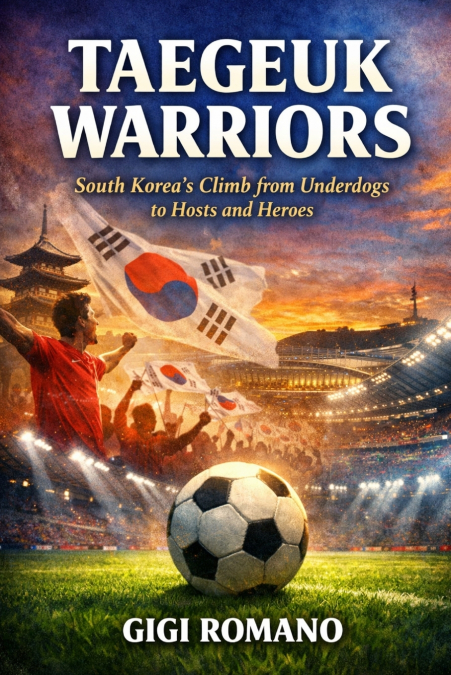
South Korea’s men’s national football team is more than a sporting side-it is a national institution shaped by history, discipline, and relentless expectation. From football’s fragile arrival on the peninsula through war, division, and reconstruction, the Taegeuk Warriors evolved alongside a nation learning to measure itself against the world. This book traces that journey in full, charting how a team once defined by endurance and ambition became Asia’s most consistent World Cup presence and a global standard-bearer.Through detailed, fact-based narrative, the book follows South Korea’s competitive development across eras: early regional rivalries, the hard lessons of initial World Cup appearances, the professionalization of domestic football, and the transformation of preparation, coaching, and tactics. It examines how school systems, military service, and corporate teams shaped a football culture rooted in discipline, and how exposure to global football gradually expanded that identity toward tactical control and international fluency.At the center of the story stands the 2002 World Cup-hosted at home and remembered as a defining national moment-but this is not a single-tournament account. It is a longitudinal history of continuity: repeated qualification, evolving expectations, and the emotional weight carried by every generation that follows. Later chapters explore life after 2002, the burden of comparison, the rise of globally recognized stars, and the unrelenting pressure of modern Asian qualifying.Taegeuk Warriors ultimately argues that South Korea’s greatest football achievement is not one result, but permanence. Achievement raised expectation, and expectation reshaped identity. Each new team inherits a legacy of effort, scrutiny, and national responsibility-because in Korean football, the next match never waits.