Inicio > Humanidades > Historia > Historia regional y nacional > Historia de Asia > Life and Death in the Korean Bronze Age (c. 1500-400 BC)
Life and Death in the Korean Bronze Age (c. 1500-400 BC)

Life and Death in the Korean Bronze Age (c. 1500-400 BC)

GUÍA PARA COMBATIR LAS CAUSAS DE LA INFELICIDAD

Sunwoo Kim

108,34 €
IVA incluido
Disponible
Editorial:
British Archaeological Reports (Oxford) Ltd
Año de edición:
2015
Materia
Historia de Asia
ISBN:
9781407313511
Páginas:
320
Encuadernación:
Otros
108,34 €
IVA incluido
Disponible
Añadir a favoritos

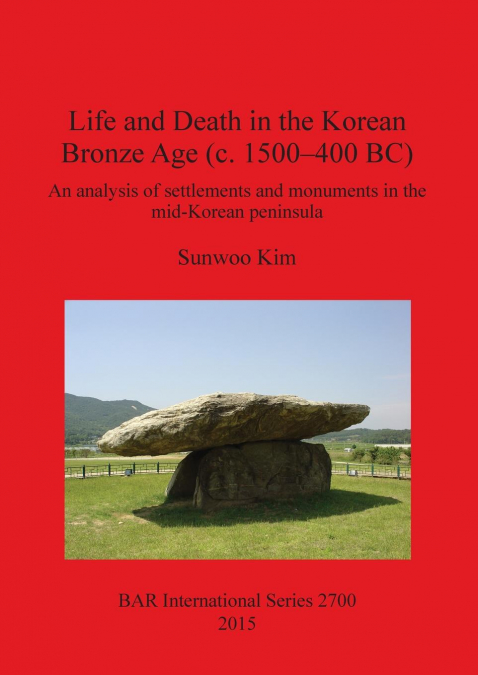
This research focuses on the Bronze Age in selected areas of Korea; Seoul, Incheon, and Gyeonggi province. Two forms of evidence - settlements and monuments - are taken into account to identify their relationship with landscape and the social changes occurring between ca. 1500 to 400 cal BC. Life and death in the Bronze Age in Korea has not been synthetically investigated before, due to the lack of evidence from settlements. However, since academic and rescue excavations have increased, it is now possible to examine the relationship between settlements and monuments on a broad scale and over a long-term sequence, although there are still limitations in the archaeological evidence. The results of GIS (Geographical Information System) analysis and Bayesian modelling of the radiocarbon dates from this region can be interpreted as suggesting that Bronze Age people in the mid-Korean peninsula had certain preferences for their habitation and mortuary places. The locations of two archaeological sites were identified and statistical significance was generated for their positioning on soil that was associated with agriculture. It was found that settlements tended to be located at a higher elevation with fine views and that monuments tended to be situated in the border zones between mountains and plains and also within the boundary of a 5km site catchment adjusted for energy expenditure, centring on each settlement. This configuration is reminiscent of the concept of the auspicious location, as set out in the traditional geomantic theory of Pungsu. It can be argued that Bronze Age people chose the place for the living and the dead with a holistic perspective and a metaphysical approach that placed human interaction with the natural world at the centre of their decision-making processes. These concepts were formed out of the process of a practical adaptation to the Bronze Age landscape and environment in order to practice agriculture as a subsistence economy, but they also exerted a profound influence upon later Korean peoples and their identities.
Artículos relacionados

  • Understanding Aikido
    Jan J Sunderlin
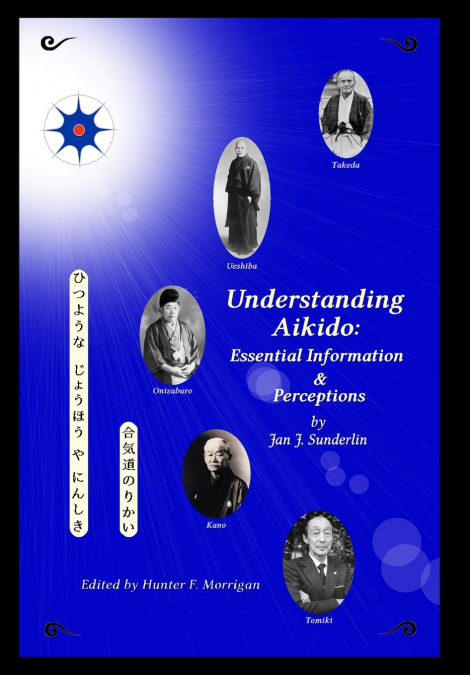
    Understanding Aikido: Essential Information and Perceptions (Special Edition) presents an historical, cultural, and philosophical look at the development of the Japanese martial art of Aikido. Sunderlin focuses on the influences brought to bear on Morihei Ueshiba, the founder of Aikido, and the subsequent cultivation of the latter's martial art as a vessel of Budo. The author a...
    Disponible

    63,06 €

  • Not by Love Alone
    Margaret Mehl
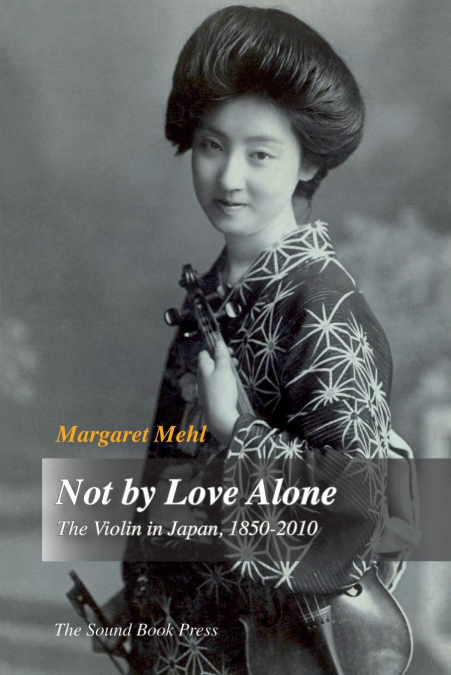
    Suzuki Shin'ichi, the Tokyo String Quartet, Midori - How did Japanese violinists manage to revolutionize violin teaching, win international competitions, conquer Western concert stages, study at world-famous conservatoires and take up positions in leading orchestras and prestigious music faculties? What enabled the Japanese to master Western classical music within a few decades...
    Disponible

    29,32 €

  • Pictures in Transformation
    Luca Maria Olivieri
    ...
    Disponible

    54,79 €

  • South Asian Archaeology 2007
    Proceedings of the 19th Meeting of the European Association of South Asian Archaeology in Ravenna, Italy, July 2007.                     ...
    Disponible

    182,04 €

  • The Battle for Fortune
    Charlene Makley
    In a deeply ethnographic appraisal, based on years of in situ research, The Battle for Fortune looks at the rising stakes of Tibetans' encounters with Chinese state-led development projects in the early 2000s. The book builds upon anthropology's qualitative approach to personhood, power and space to rethink the premises and consequences of economic development campaigns...
  • CHINA THROUGH AMERICAN EYES
    Wenxian Zhang / ZHANG WENXIAN
    Cultural understanding between the United States and China has been a long and complex process. The period from the mid-nineteenth century to the early twentieth century is not only a critical era in modern Chinese history, but also the peak time of illustrated news reporting in the United States. Besides images from newspapers and journals, this collection also contains pictur...
    Disponible

    159,39 €