Pierre-Joseph Proudhon
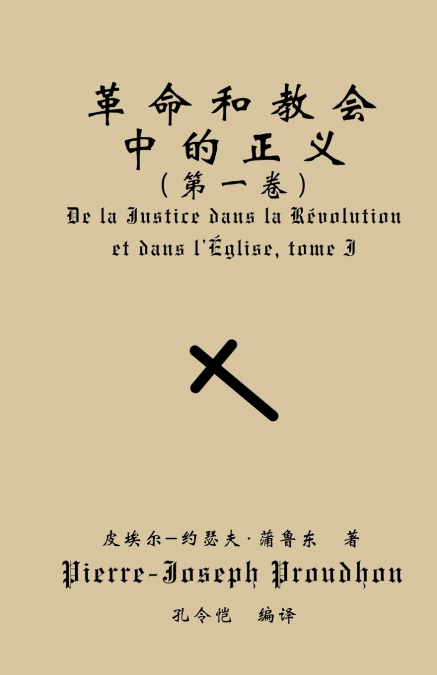
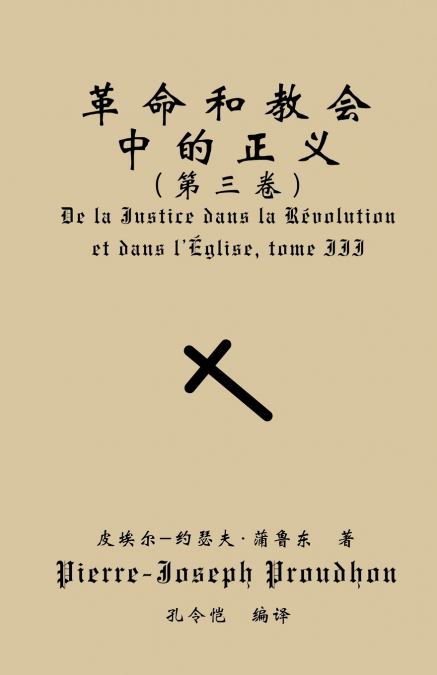
In De la Justice dans la Révolution et dans l’Église, Volume II shifts the investigation from the foundational principles of justice to their formation, deformation, and contestation within concrete social practices. If the first volume establishes justice as an immanent moral law grounded in reciprocity and human dignity, the second volume examines how this law is shaped-or distorted-through education, labor, intellectual discipline, religious ritual, and moral psychology.The volume opens with an extensive critique of ecclesiastical education, arguing that religious pedagogy systematically undermines autonomy by replacing conscience with obedience, moral judgment with ritual, and ethical responsibility with sacramental mediation. Education, Proudhon insists, must cultivate the individual as a free moral agent capable of reasoning, working, and judging within society, rather than as a penitent subject dependent on transcendental authority. This analysis extends to the formation of the self, social relations, humanity’s relation to nature, and the confrontation with death.A second major axis of the volume is labor. Here Proudhon challenges theological and metaphysical doctrines that treat labor as a curse, a punishment, or a merely instrumental activity. Against both fatalism and charity-based moralism, he articulates a conception of labor as a domain of justice, freedom, and collective organization, culminating in a revolutionary vision of workers’ rights and the internal constitution of the workshop.The later sections address ideas, public reason, conscience, and freedom. Proudhon contrasts scientific and revolutionary methods of inquiry with ecclesiastical probabilism and absolutism, exposing how claims to infallible truth corrupt public reason and moral life. The volume concludes with a sustained defense of conscience and free will, tracing their philosophical genealogy and affirming them as the indispensable conditions of justice.Taken as a whole, Volume II transforms justice from an abstract principle into a lived social process, revealing how moral freedom must be actively produced against the pressures of authority, habit, and belief.