Ancient Rome

Ancient Rome

Hui Wang

25,39 €
IVA incluido
Disponible
Editorial:
Hui Wang
Año de edición:
2026
Materia
Historia antigua: hasta c. 500 e. c.
ISBN:
9789190150177
25,39 €
IVA incluido
Disponible
Añadir a favoritos

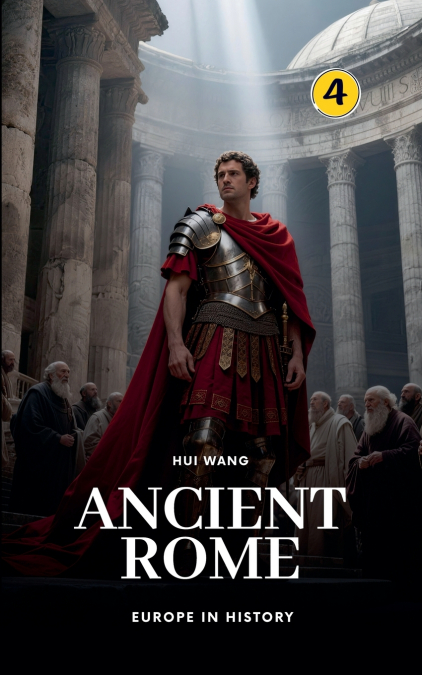
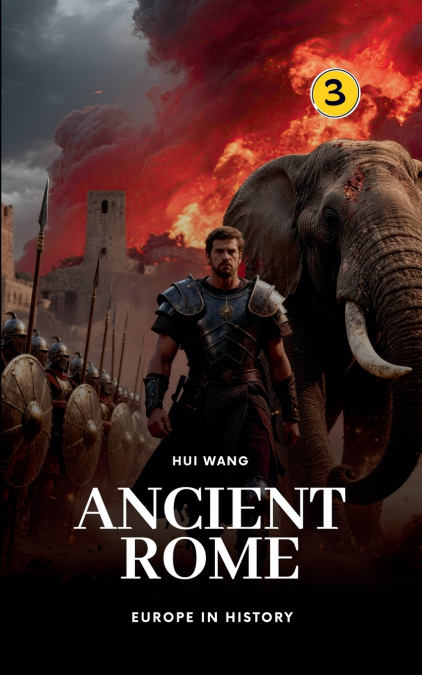
Ancient Rome: Europe in History, PART ONE, is the book I wrote to tell Rome’s story from the ground up, starting with Romulus and Numa and the fragile order they tried to build. These early figures were not just legends; they shaped how Romans thought about law, religion, violence, and authority. From sacred rituals to kingship, from fear to discipline, this opening part shows how Rome learned to hold itself together before it ever dreamed of ruling others.As the narrative moves on, the focus shifts to power inside the city. Figures like Servius Tullius come into view, along with the curial system, the Comitia, and the slow rise of the Senate. The fall of the kings and the birth of the Republic did not bring calm or equality. Consuls, senators, patrons, and ordinary citizens pushed and pulled against each other, arguing over law, land, and voice. Reforms such as the Licinian-Sextian laws reveal a society constantly renegotiating who counted and who decided.Rome’s wars then take center stage, and the story widens beyond Italy. The First Punic War introduces Rome as a naval power, while the Second and Third Punic Wars bring unforgettable figures like Hannibal and Cato onto the stage. The destruction of Carthage was not just a military triumph; it changed Rome’s economy, its politics, and its sense of destiny. Victory made Rome rich, restless, and increasingly dangerous to itself.From there, Rome steps into the Greek world. The Macedonian Wars, the clash with Antiochus III, and campaigns stretching from Macedon to North Africa show a republic learning how to dominate ancient kingdoms with very different traditions. Battles, diplomacy, and intimidation all play their part. Rome now commands immense power, yet it still relies on old institutions that strain under the weight of empire.The final chapters turn inward, to the crisis of the Republic itself. Tiberius Gracchus and Gaius Gracchus stand at the heart of this struggle, as land reform, grain laws, popular power, and elite resistance collide. Their rise and fall expose deep cracks in Rome’s political system, ending in bloodshed and fear. By the time of Gaius Gracchus’s last stand, the Republic is no longer stable, and its future feels uncertain.
Artículos relacionados

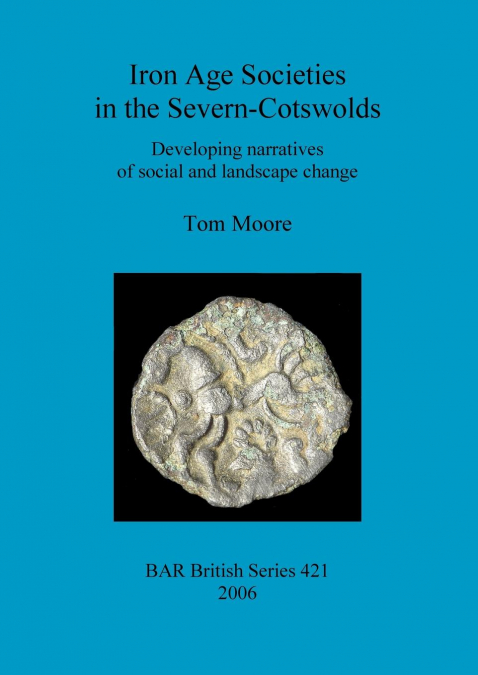
  • Iron Age Societies in the Severn-Cotswolds
    Tom Moore
    The central theme of this study is an examination of the processes of change in Iron Age social organisation and identity on a regional scale using the Severn-Cotswolds area in England as a case study. It aims to provide a coherent narrative of the period in the region based on the wealth of current data now available, providing a basic storyboard against which future studies c...
    Disponible

    144,57 €

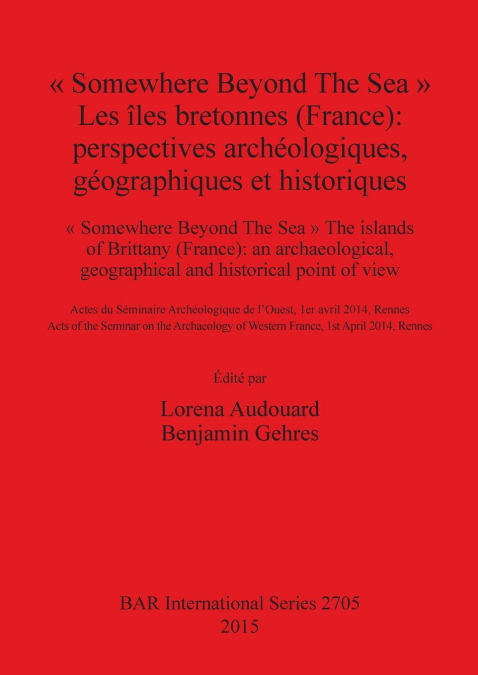
  • Somewhere Beyond The Sea Les îles bretonnes (France)
    The Seminar on the Archaeology of Western France, which focused on the islands of Brittany, was held on 1 April 2014 at the University of Rennes 1. The desire to organize this seminar arose spontaneously from the dynamism which currently animates archaeological research on island spaces of the western seaboard of France. Indeed, the seminar took place during a pivotal period of...
    Disponible

    86,11 €

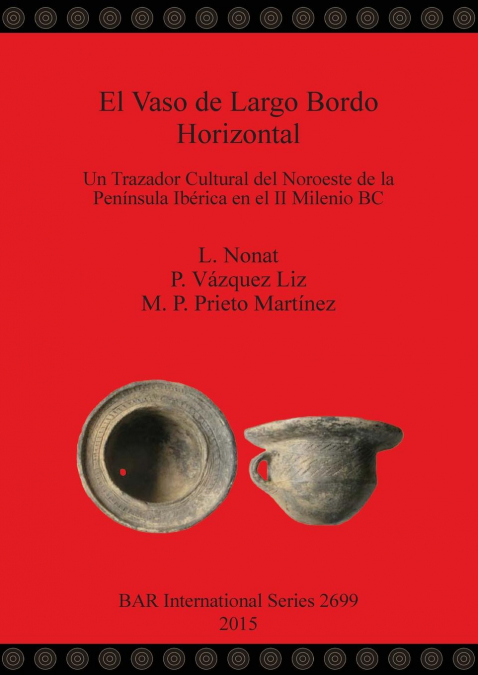
  • El Vaso de Largo Bordo Horizontal
    L. Nonat / LNonat / M. P. Prieto Martínez / MPPrieto Martínez / P. Vázquez Liz / PVázquez Liz
    In this paper the authors study a specific type of pottery from the northwest Iberian Peninsula, known as the Wide Horizontal Rim (WHR) vessel. One of its distinctive aspects is precisely the fact that it is exclusively found in this region, which now comprises the Spanish region of Galicia and northern Portugal, as far south as the River Duero. This type of pottery, of which t...
    Disponible

    115,71 €

  • A Connecting Sea
    Stašo Forenbaher
    This book includes papers stemming from a session at the EAA conference held in Zadar in September 2007.                          ...
    Disponible

    79,97 €

  • The Roman Pottery Production Site at Wickham Barn, Chiltington, East Sussex
    Chris Butler / Malcolm Lyne
    The excavations undertaken at Chiltington in East Sussex revealed two Roman pottery kilns, as well as remains from prehistory and from medieval period.The kilns are well documented, and all the finds were examined and catalogued. Three phases were identified. The pottery produced on the site indicate a strong New Forest influence. ...
    Disponible

    55,62 €

  • Kurgans, Ritual Sites, and Settlements
    Edited by: Jeannine Davis-Kimball, Eileen M. Murphy, Ludmila Koryakova and Leonid T. YablonskyThis richly illustrated volume adds immensely to the small but growing corpus of Eurasian Archaeology published in the English language. Comprised of thirty articles, the authors have focused on the Bronze Age, continuing to include the first millennium BC Early Iron Age, with a termin...
    Disponible

    158,26 €

Otros libros del autor

  • Ancient Rome
    Hui Wang
    Ancient Rome: Europe in History, PART TWO, is the book I wish I’d had when I first tried to make sense of Rome’s long slide from republic to empire. I start with Gaius Marius - the reformer whose changes to recruitment and the structure of the legions quietly altered the balance of power in Rome - and then press on to the hard question of why the Republic broke down at all.From...
    Disponible

    24,28 €

  • Ancient Greece
    Hui Wang
    Ancient Greece: Europe in History, PART TWO, is my attempt to tell the Greek story the way it actually felt to live it-tense, unstable, and full of agonizing choices. I open the book with two competing roads to power, Athens and Sparta, and trace how their very different ideas about freedom, discipline, and leadership pushed the Greek world toward confrontation. What begins as ...
    Disponible

    24,40 €

  • Iraq and the Age of Intervention
    Hui Wang
    Iraq and the Age of Intervention: The Middle East in History, is my attempt to make sense of how a single country kept drifting from one war into the next-and why outside powers kept stepping in. I start at the Shatt al‑Arab, that contested waterway where borders, currents, and national pride conspire to make conflict almost inevitable. From there the story moves into the bitte...
    Disponible

    25,34 €

  • From Shah to Revolution
    Hui Wang
    From Shah to Revolution: The Middle East in History, is my attempt to tell the modern Middle East as it actually unfolded - not as tidy abstractions, but through the messy, human forces of people, pressure, and hard choices. I start in Iraq, not Iran: with oil and power, and with the slow, relentless rise of Saddam Hussein. Moving from the chapter 'Iraq First' to 'Saddam Hussei...
    Disponible

    24,30 €

  • The Making of Ba’athist Iraq
    Hui Wang
    The Making of Ba’athist Iraq: The Middle East in History, is my attempt to tell Iraq’s modern story the long way, not the shortcut readers often prefer. Before Saddam Hussein and before the Ba’ath Party took center stage, a series of agreements and regional power plays were already redefining the map - British treaties and negotiations, border settlements involving Najd and the...
    Disponible

    24,43 €

  • The PLO Years
    Hui Wang
    The PLO Years: The Middle East in History, is my attempt to tell the story behind the headlines - the people, the decisions, and the accidents that shaped the modern Middle East. It opens with the Battle of Karameh - the April 1968 clash that transformed Yasser Arafat into a regional symbol - and then follows the emergence of Fatah, tracing how a dispersed, underground network ...
    Disponible

    23,37 €