Shree Shambav
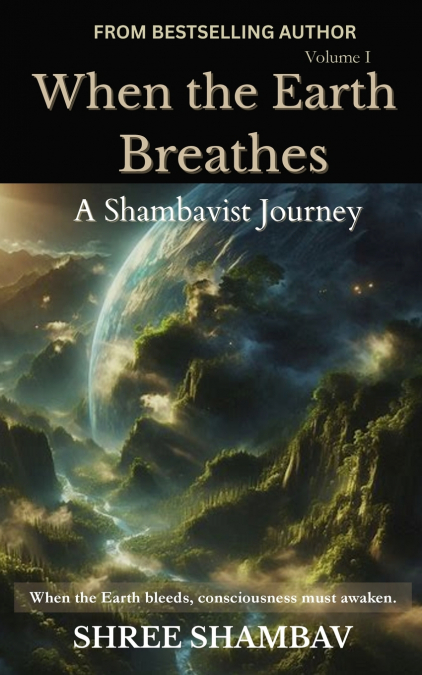
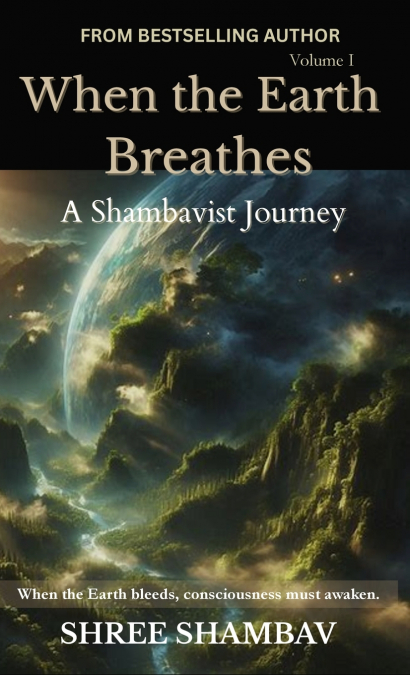
This book was not written to inform the mind alone. It was written to awaken a memory.There are moments in human history when knowledge is no longer the missing piece-remembrance is. We already know that the forests are vanishing, the oceans are suffocating, the climate is destabilising, and countless species are disappearing silently. These facts are available, documented, and repeated. Yet something essential remains untouched. The crisis persists not because humanity lacks information, but because it has grown distant from relationships.When the Earth Breathes was born from this recognition.The Shambavist journey does not begin with protest or policy, nor does it end with belief or ideology. It begins with a pause-with listening. It asks a question rarely spoken aloud: What if the Earth is not an object we inhabit, but a living presence we are in relationship with? From this inquiry, a different kind of responsibility emerges-one rooted in reverence rather than obligation, conscience rather than compliance.This book does not stand against science, progress, or development. It stands against unconsciousness. It challenges the inherited belief that humans are separate from nature, entitled to extract without consequence. In the Shambavist view, separation itself is the original wound. Ecological collapse is not portrayed here as an external disaster, but as an inner disconnection expressed outwardly across land, water, air, and life.You will not find rigid doctrines on these pages, nor instructions imposed from above. Instead, you will encounter stories-quiet and contemplative, sometimes unsettling in their honesty. Stories of rivers that remember their own purity, of forests that endure wounds in silence, of stones that have witnessed time without judgment, and of human beings who slowly forgot how to listen. Guruji’s teachings do not demand transformation; they awaken recognition. The reader is not pushed forward, but gently guided inward-back to a way of seeing that feels deeply familiar, as though something ancient is being remembered rather than something new being taught.This volume is intentionally slow. It resists urgency as a weapon and chooses presence as a guide. The chapters are meant to be felt as much as understood. Some may read this book quickly; others may find themselves pausing often, compelled to reflect, question, or sit in silence. All responses are valid. Transformation does not follow a schedule.Volume One establishes the spiritual and moral foundation of this work. It invites you to see the Earth as sacred, to recognise ecocide as a rupture of conscience, and to understand that healing begins not with grand gestures, but with alignment-within thought, habit, and relationship. Volumes Two and Three, to be released as separate books, will move deeper into embodiment, collective responsibility, and practical pathways of awakening. This first volume, however, asks only one thing of you: to listen honestly.You need not agree with everything written here. You need not adopt new beliefs. But if, at any point, you find yourself feeling more present-more attentive to the ground beneath your feet, the air entering your lungs, or the silence between sounds-then this book has already begun its work.May these pages not merely be read, but remembered. May they restore the conversation that was never meant to end