Andrew Parry
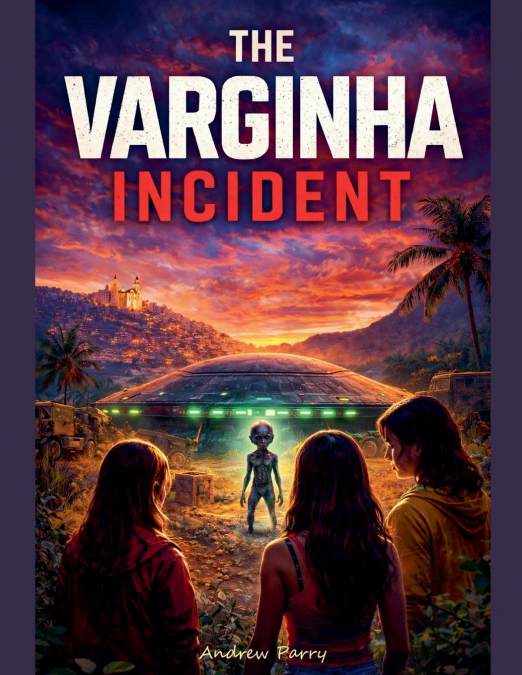
In January 1996, the Brazilian city of Varginha became the center of a story that refused to stay local. Reports spread of a strange presence on the ground, a close-range encounter that left witnesses shaken, and a town suddenly watching itself be watched. Within hours, rumour and radio chatter began stitching fragments into a shared narrative, and within days, the incident had escalated into national controversy. What followed was not a simple mystery with a neat solution, but a long-lived collision between testimony and denial, between civic memory and official minimization. The Varginha Incident is the definitive, method-driven exploration of what happened, what was claimed, what was later added, and why the case still divides people decades later.This book approaches Varginha the way serious case reconstruction demands, by building a timeline without smoothing contradictions into convenient coherence. It follows the earliest witness descriptions, tracking how sensory details, fear, and shock can lock certain impressions in place even as other elements drift with time and retelling. It examines how a local story becomes national folklore, and how that transformation can change the behavior of witnesses, officials, and media alike. It explores the institutional logic of minimization, showing how routine explanations and restricted spaces can be interpreted as either ordinary procedure or deliberate concealment depending on the baseline of social trust. It also confronts the most contested threads of the story, including transport and custody claims, hospital narratives, and medical allegations, with a firm distinction between what is asserted and what is auditable. By refusing both cynicism and easy belief, the book keeps the human gravity of the testimony intact while maintaining strict boundaries around inference.Varginha is also a story about what happens after an incident, when a community must live with global attention and unresolved questions. The book shows how retellings, documentaries, and ufology networks can reignite a case decades later, not only by introducing late testimony but by reshaping the public template through which the story is understood. It explains how pop culture can standardize motifs into 'canon,' and how that canon can contaminate memory even in sincere witnesses. It explores the ethics of telling the story without exploiting the town, and the social dynamics that turn disagreement into two separate realities. It also examines how Varginha’s 'ET' iconography and tourism reflect a deeper civic choice, transforming external sensationalism into local ownership and cultural identity. The incident becomes not only a question of what was seen, but a mirror of how belief forms when evidence is partial and authority is distrusted.The Varginha Incident is written for anyone who wants more than a sensational summary and less than a forced conclusion. It is an immersion into the case as it actually behaves in the real world, messy, contested, emotionally vivid, and structurally difficult to resolve. It offers a clear framework for separating the core case from expanding legends, for interviewing witnesses without leading them, and for evaluating medical and institutional claims without collapsing into ridicule or dogma. In a world where unresolved data is increasingly common and social trust is increasingly fragile, Varginha stands as a powerful lesson in how modern societies negotiate the unknown. The question at the center remains open, but the meaning is not. This is the story of a town that changed, a narrative that grew, and a mystery that still teaches how to think when closure never arrives.