Inicio > Matemáticas y ciencia > Biologia, ciencias de la vida > Microbiología (no médica) > Étiologie des diarrhées infectieuses chez l’enfant de 0-5 ans au Tchad
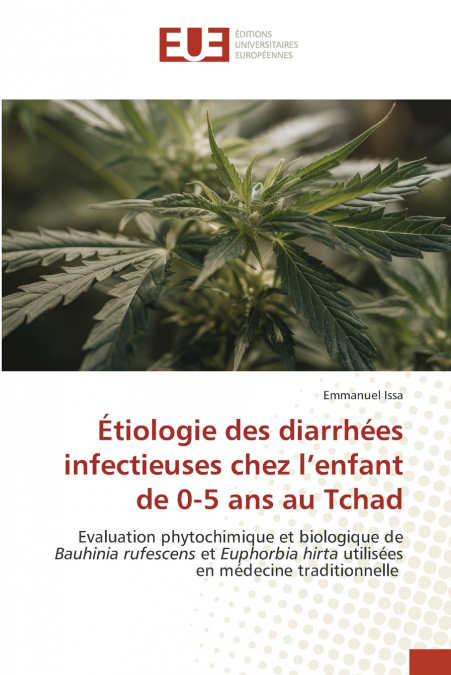
Étiologie des diarrhées infectieuses chez l’enfant de 0-5 ans au Tchad

Étiologie des diarrhées infectieuses chez l’enfant de 0-5 ans au Tchad

Emmanuel Issa

105,25 €
IVA incluido
Disponible
Editorial:
KS OmniScriptum Publishing
Año de edición:
2025
Materia
Microbiología (no médica)
ISBN:
9786206690627
105,25 €
IVA incluido
Disponible
Añadir a favoritos

Les maladies diarrhéiques constituent l’une des principales causes de morbidité et de mortalité chez les enfants âgés de moins de 5 ans. Cette thèse a pour objectif de déterminer l’étiologie des diarrhées infectieuses chez l’enfant âgé de 0 à 5 ans au Tchad et d’évaluer les activités biologiques de Bauhinia rufescens et Euphorbia hirta, deux plantes utilisées au Tchad pour le traitement des diarrhées. Les analyses parasitologiques et bactériologiques des selles ont été réalisées au Laboratoire médical de l’Hôpital Provincial de Doba (Tchad) selon le protocole en vigueur au Laboratoire. Le Laboratoire de Microbiologie et de Contrôle de Qualité des Denrées Alimentaires (LAMICODA) de Lomé a servi de cadre d’étude pour l’extraction, le screening phytochimique et l’évaluation des activités biologiques de Bauhinia rufescens et Euphorbia hirta. Le screening phytochimique a été réalisé par la méthode de coloration et l’évaluation des activités antimicrobiennes par la méthode de microdilution. La toxicité cellulaire et l’immunostimulation ont été réalisées sur une culture cellulaire pendant 24 h sous 5% de CO2.
Artículos relacionados

  • Acidophiles
    Acidophiles are life-forms that grow preferentially in natural or man-made environments where the pH is well below seven. Together with other categories of extremophiles, they have greatly expanded our knowledge of the diversity of life, our understanding on how microorganisms can adapt to seemingly hostile situations, and provided scenarios for the possibility that life-forms ...
  • Frontiers in Dengue Virus Research
    Dengue virus (DENV), a mosquito-borne flavivirus, is the causative agent of dengue fever, currently one of the most significant emerging disease challenges to global public health. Although dengue is an old disease, recent decades have seen an unprecedented increase in the geographic range, incidence, and severity of infection. The virus infects 100 million people annually and ...
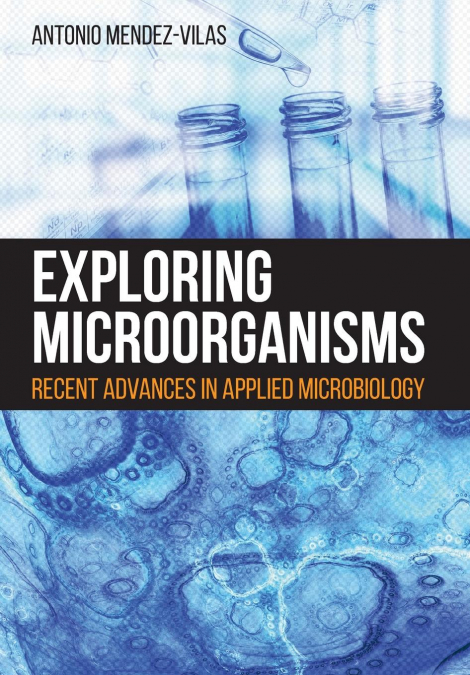
  • Exploring Microorganisms
    Antonio Mendez-Vilas
    Exploring Microorganisms: Recent Advances in Applied Microbiology, contains a selection of papers presented at the VII International Conference on Environmental, Industrial and Applied Microbiology - BioMicroWorld2017 (Madrid, Spain). This book offers the outcomes of completed and outgoing research works and experiences of several microbiology research groups across the world. ...
    Disponible

    45,55 €

  • The Cell Biology of Cyanobacteria
    In this book, leading senior scientists and young researchers review the current key topics in cyanobacterial cell biology to provide a timely overview. Topics covered include: historical background; cell division; the cell envelope; the thylakoid membrane; protein targeting, transport and translocation; chromatic acclimation; the carboxysome; glycogen as a dynamic storage of p...
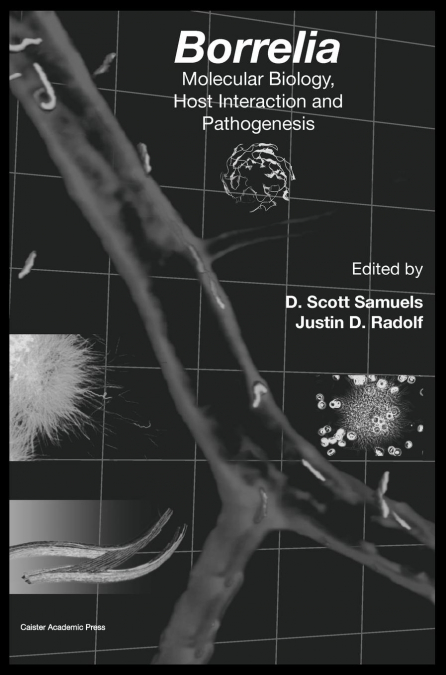
  • Borrelia
    D Scott Samuels
    ...
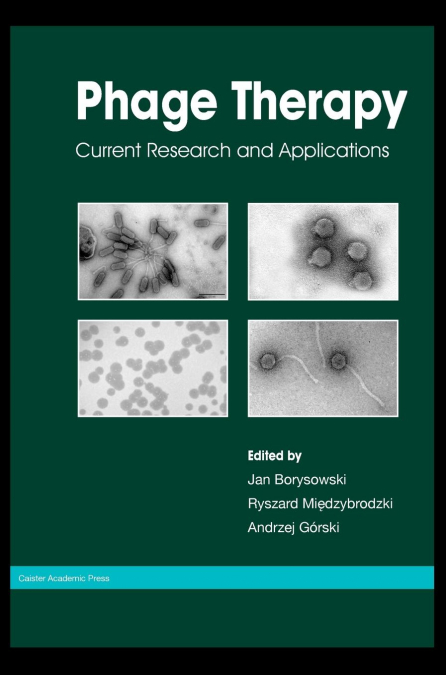
  • Phage Therapy
    Jan Borysowski
    ...