Bolivia
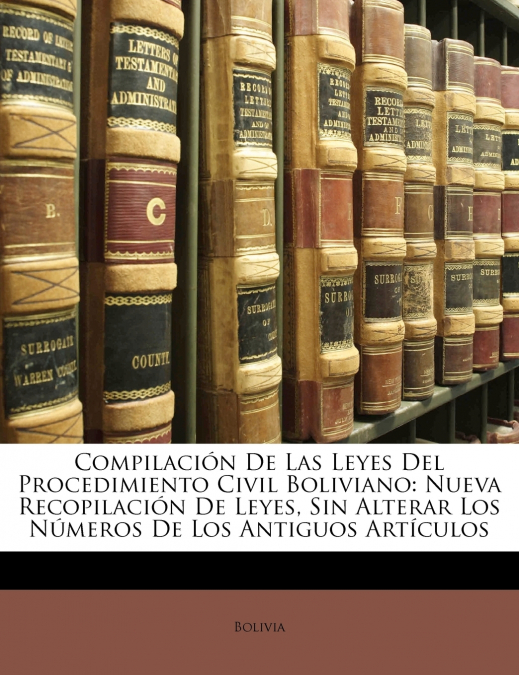
Estracto Del Código Militar Para El Uso Del Ejército Boliviano (segunda Entrega) presents an essential compilation of military regulations tailored for the Bolivian armed forces. This book serves as a vital reference for understanding the legal framework governing military conduct and justice within Bolivia. It offers insights into the structure and operation of the Bolivian military legal system, providing a valuable resource for military personnel, legal scholars, and historians interested in the evolution of military law in Latin America.Focusing on the specifics of Bolivian military jurisprudence, this extract provides a glimpse into the regulations shaping military life and governance in the region. A crucial historical document for those studying Bolivian history and military legal systems, this book illuminates the complexities of maintaining order and justice within a national army. Its enduring relevance lies in its detailed examination of military law within a specific historical and geographical context.This work has been selected by scholars as being culturally important, and is part of the knowledge base of civilization as we know it. This work was reproduced from the original artifact, and remains as true to the original work as possible. Therefore, you will see the original copyright references, library stamps (as most of these works have been housed in our most important libraries around the world), and other notations in the work.This work is in the public domain in the United States of America, and possibly other nations. Within the United States, you may freely copy and distribute this work, as no entity (individual or corporate) has a copyright on the body of the work.As a reproduction of a historical artifact, this work may contain missing or blurred pages, poor pictures, errant marks, etc. Scholars believe, and we concur, that this work is important enough to be preserved, reproduced, and made generally available to the public. We appreciate your support of the preservation process, and thank you for being an important part of keeping this knowledge alive and relevant.